
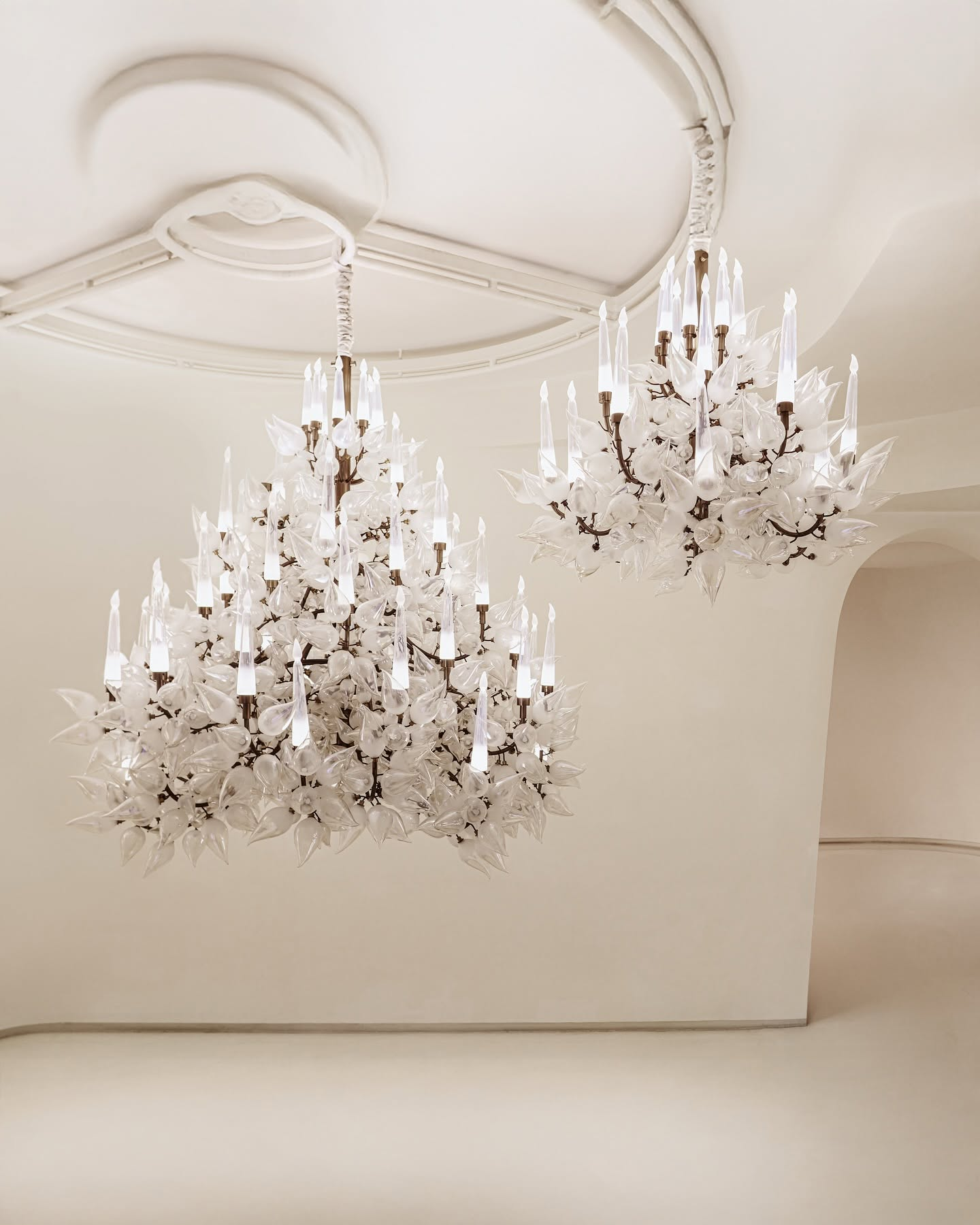
A chandelier does more than light a room. It brings character, anchors the space, and pulls the whole design together. Choosing a large size, and the light installation overwhelms everything around it. Choose a small size, and the fixture feels disconnected from the room it's meant to define.
At KLove Studio, we think of lighting as an exercise in balance, proportion, scale, and some personal instinct. Here are seven rules you can refer to while choosing the right chandelier light in 2026.
1. Begin With the Room Size Formula
The simplest way to estimate chandelier diameter? Add your room's length and width in feet.
Formula: Room length (ft) + Room width (ft) = Approximate chandelier diameter (inches)
For instance, a 12 × 14 ft room would suit something around 26 inches across. Treat this as a starting point, though, not a rule carved in stone.
2. Consider the Furniture and Surrounding Space
Your chandelier needs to feel like it belongs, proportionate to the furniture around it, in step with the room's layout, and balanced against everything else competing for attention. Look at what's nearby. A sofa, a table, the sweep of the room itself.
A larger space can carry something substantial. A smaller one often does better with a lighter touch, something more understated. Either way, the goal stays the same: a look where modern hanging light fixtures complement the room, rather than fighting it for the spotlight.
3. Prioritise the Hanging Height
Hang it wrong, and even the most beautiful chandelier feels detached from the space. When hung correctly, the entire space appears polished and considered.
- Dining room: Keep the bottom of the fixture about 30–36 inches above the tabletop.
- Living room: Leave enough clearance below, especially where people walk or sit.
- Entryway: Think about ceiling height, sightlines, and how close the nearest door is before you commit to a spot.
4. Consider Your Ceiling Height
Ceilings shape everything about proportion here. Standard ceilings often call for something compact, maybe semi-flush. Higher ceilings, though, give you the opportunity to experiment, longer drops, tiered silhouettes, and more sculptural shapes.
A rough starting point: about 2.5–3 inches of fixture height per foot of ceiling. You can adjust accordingly depending on the room.
5. Think About Visual Weight, Not Just Size
Size on paper isn't the whole story. A dense, layered chandelier can feel far bigger than an open, airy one, even at the exact same diameter.
Before deciding, inspect your furniture, your ceiling details, and your wall finishes. The whole picture matters, not just the tape measure.
6. Choose a Shape That Fits the Space
The shape should echo the room's own logic.
- Round chandeliers, like the Indian Classical chandelier, suit round tables and square rooms.
- Linear designs like the Dive chandelier work best over rectangular tables or kitchen islands.
- Sculptural pieces like the Enchanted Forest chandelier can bring real drama to living rooms, stairwells, and entryways.
The aim, always, is harmony between the fixture and the architectural lighting concepts that centre around it.
7. Balance Size With Light Output
A gorgeous chandelier still needs to do its job. Think about the room's purpose, what other lighting is already there, how bright the bulbs run, and whether dimming is an option.
For living room chandeliers, pairing them with wall lights, floor lamps, or recessed lighting often makes the whole space feel more comfortable and more flexible, too.
Find the Perfect Balance With KLove Studio
Choosing the right chandelier isn’t about measurements alone but also proportion, ceiling height, and a sense of what feels right. Use these seven rules as your guide, then trust your eye for the rest.
At KLove Studio, we believe modern chandeliers are what tie a room together, spaces that feel considered, inviting, and unmistakably yours.